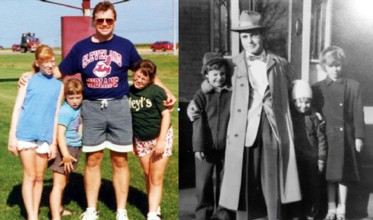
By Allison Barnhart, author of The Record Keeper
 The CDC describes epigenetics as the study of how your behaviors and environment can cause changes that affect the way your genes work.
Unlike genetic changes, epigenetic changes are reversible and do not change your DNA sequence, but they can change how your body reads a DNA sequence. So what does it all mean in regards to who we are and who we may or may not become? The DNA you have and the order it’s in is unchanging, but the way your body reads the sequence and expresses it can change—but it can also have the ability to revert back.
When would this happen if it even does happen to some people? What would cause this type of epigenetic change? It's a fascinating notion!
As I sat in the longest drive-thru line at the pharmacy known to man, my mind wandered. Instead figuring out what we’re going to do for dinner that night, I asked myself things like:
Is it possible to know things you never learned?
What if some of my dreams are actually pieces of a memory passed down from an ancestor?
Are generational curses real? Sins of the father—what is this about?
What’s the purpose behind the feeling of déjà vu?
Can some people have premonitions or precognitions? What is different about them than others? Or does everyone have that ability, some just pay attention more than others? Is it purely intuition or a different kind of intelligence?
Is Extra Sensory Perception real?
No, I am not a philosopher, neuroscientist, geneticist, or psychoanalyst. This article is purely to unpack what I’m learning and want to learn more about as the science of epigenetics evolves.
Nature vs. Nurture
So obviously there are genetic traits like hair color, height, and hereditary illnesses. Those would fall into the nature category. Then there are environmental factors (nurture) within the family structure like parental or guardian behaviors, socioeconomic status, physical/emotional/mental health, conflict (or lack thereof), and other circumstances that may cause stress in some form or fashion. Community structure like school, religious organizations, neighborhoods are a factor as well.
I hear the nature vs. nurture mentioned when conversation swirls around families including step parents, step siblings, and adoptees. Interestingly, it’s actually more of a modern idea to accept that our behavior and our genetic make-up is a combination of nature AND nurture.
An article by David J. Lewkowicz talks about how Plato and Aristotle had “radically different answers” when it came to understanding how the “origins of human knowledge” came to be. I’ll leave you with this excerpt from his article on the two ancient philosopher’s views on this matter.
“Plato’s view spawned the rationalist school of thought whose basic tenet that all knowledge is innate was later championed by Descartes, Spinoza, Leibniz, and Kant. In contrast to Plato, Aristotle argued that our sense data are sufficient to specify abstract concepts and ideas and, therefore, that human knowledge is acquired through everyday experience.
“Aristotle’s views spawned the empiricist school of thought whose basic belief in the power of experience was subsequently championed by Locke, Berkeley, Hume, and Mill. The divergent views expressed by the rationalists and empiricists gave rise to the nature-nurture dichotomy.”
Stay tuned for next month to learn about how our families impact our personalities